
ISAMU NOGUCHI
All works in the collection (1)
-
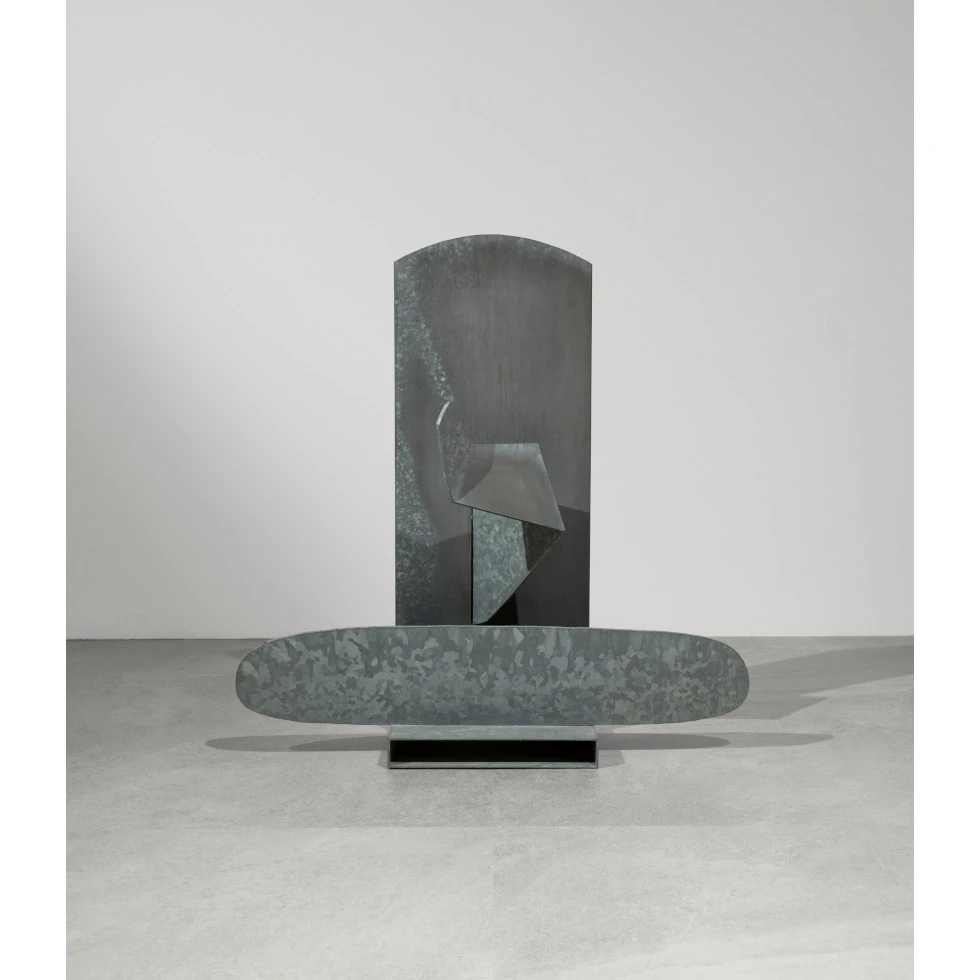
Title: Zazen
Year: 1982-1983
Medium: hot-dipped galvanized steel
Dimensions: 78.7 x 76.8 x 26.7 cm (31 x 30 1/4 x 10 1/2 in.)
Isamu Noguchi was born in Los Angeles (US) in 1904. He spent his childhood in Japan before moving to the United States alone at the age of 14. He entered Columbia University in New York as a premedical student in 1924, while also starting to take evening classes in sculpture at the Leonardo da Vinci School of Art in the Lower East Side. In 1927, he was awarded a John Simon Guggenheim Fellowship to study in Paris, where he gathered a range of experiences, such as working as an assistant to the sculptor Constantin Brâncuşi for half a year. When Noguchi visited Japan in 1931, he encountered ceramics and was deeply impressed by haniwa clay figures and Zen gardens. In 1972, the artist established a studio in Mure, Kagawa Prefecture, the home of the Aji stone that he favored, and began his partnership with stonemason Masatoshi Izumi. In 1984, he received an honorary doctorate from Columbia University. In 1985, he established the Noguchi Museum (Long Island, NY). In 1986, he represented the United States Pavilion at the 42nd Biennale di Venezia. In 1987, he was awarded the National Medal of Arts by President Ronald Reagan, and in 1988, he was awarded the Order of the Sacred Treasure, Third Class, by the Japanese government. He passed away in New York later that same year. In 1999, the Isamu Noguchi Garden Museum Japan opened in Mure (Takamatsu City, Kagawa), which had been the base of his artistic practice.

